Tag: The HRS Show

  • Deen & Dunya: Building a Strong Muslim Family, Youth & Life

    Deen & Dunya: Building a Strong Muslim Family, Youth & Life


    In a world where education, careers, money and professional success often dominate our priorities, it can become easy to lose sight of the purpose behind them.

    But what does Islam teach us about balancing Deen and Dunya?

    On this episode of The HRS Show, a powerful discussion explores this question through topics ranging from children’s education and family responsibilities to friendship, youth, social media, repentance and maintaining hope in Allah.

    The conversation highlights an important principle: worldly education and professional success have value, but they should not come at the expense of our relationship with Allah and our preparation for the Hereafter.


    Watch the Full Conversation

    Hear the Sheikh share his advice on Deen and Dunya, family, youth, friendship, repentance and living with purpose on The HRS Show.
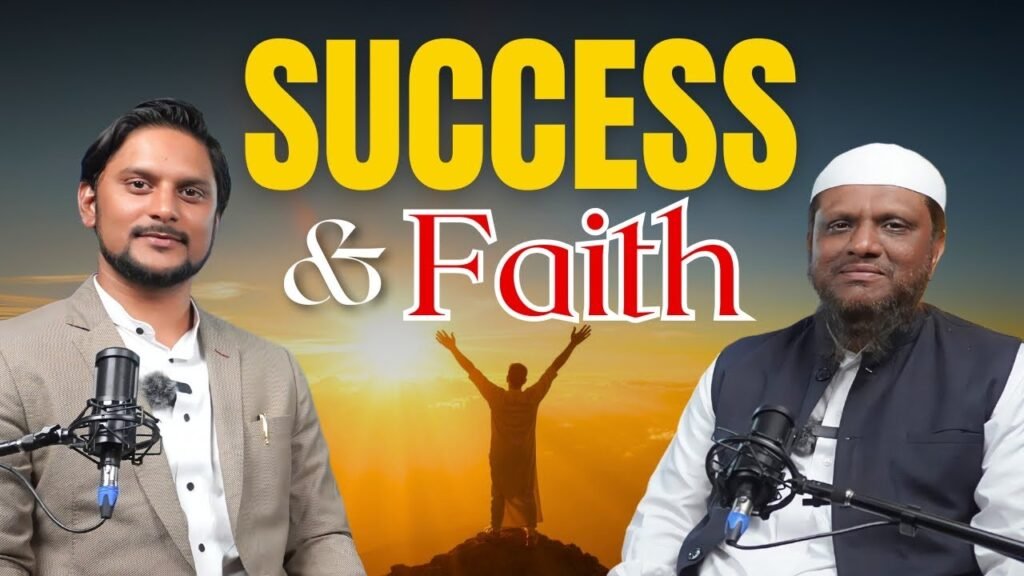
    click the thumbnail to watch the full episode on YouTube


    1. What Does It Really Mean to Balance Deen and Dunya?

    One of the central themes of the conversation is the need to give both worldly life and the Hereafter their proper place.

    The discussion refers to the Qur’anic supplication:

    “Our Lord, give us good in this world and good in the Hereafter.”

    The message is not that Muslims should abandon education, careers or worldly responsibilities.

    Instead, the problem comes when worldly success becomes the entire purpose of life.

    Education can help a person become a doctor, engineer, entrepreneur or professional. But knowledge should also teach a person how to live, how to treat parents, how to treat a spouse and how to fulfil their responsibilities before Allah.

    The episode therefore presents a useful way of thinking about Deen and Dunya: pursue excellence in this world while remembering that the Hereafter is the ultimate destination.


    2. Why Islamic Education Should Begin in Childhood

    The conversation places particular emphasis on children.

    Parents naturally want their children to become doctors, engineers and successful professionals. But academic education alone cannot prepare a child for every responsibility they will face later in life.

    A child also needs to learn about:

    • The Qur’an
    • Salah
    • Parents’ rights
    • Family responsibilities
    • The rights of a spouse
    • Good character
    • Responsibility before Allah

    The Sheikh argues that parents should introduce children to Islamic knowledge while they are young rather than waiting until adulthood.

    This does not mean abandoning modern education.

    In fact, the episode gives an example of someone who combined Islamic education with an extremely successful medical career.

    The larger lesson is that Deen and Dunya do not have to be enemies.

    A person can pursue a demanding professional career while remaining grounded in Islamic knowledge.


    3. Education Is More Than Marks and Degrees

    Another important point is the difference between education and information.

    A person can be highly educated academically and still lack knowledge about how to live properly.

    Degrees, exam results and professional achievements can change over time.

    But the way a person treats their parents, spouse, children and other people reveals another dimension of education.

    The episode argues that people sometimes become extremely successful in worldly education while neglecting the knowledge needed for their responsibilities in the Hereafter.

    This raises an important question for parents:

    Are we preparing our children only for their careers, or are we preparing them for life?


    4. Why Family Problems Can Exist Even Among Educated People

    Today, more people have access to universities and professional careers than ever before.

    Yet education alone has not eliminated family problems.

    The conversation discusses problems involving parents, spouses and family relationships and connects many of them to a lack of knowledge about people’s rights and responsibilities.

    A person may know how to build a career but not know how Islam teaches them to treat their parents.

    Someone may spend months preparing for a wedding but spend very little time learning the rights and responsibilities of marriage.

    The Sheikh makes a powerful point: preparing for marriage should involve more than preparing for the wedding.

    It should also involve learning how to become a husband or wife.


    5. Marriage Is a Responsibility, Not Ownership

    One particularly important message concerns the way spouses should view one another.

    The episode emphasizes that a woman entering her husband’s home is an amanah, a trust from Allah.

    Marriage is not about ownership.

    It is about fulfilling responsibilities and protecting the rights of another human being.

    The conversation discusses the importance of knowing the rights of both spouses before marriage and learning how the Prophet ﷺ taught husbands and wives to treat one another.

    This is an area where preparation can make a significant difference.

    Instead of spending months preparing only for the wedding ceremony, couples can also spend time learning:

    What are my responsibilities?

    What are my spouse’s rights?

    How should disagreements be handled?

    How should we protect one another’s dignity?

    These questions can help build a healthier foundation for marriage.


    6. Your Friends Can Change Your Life

    Another major theme of the episode is friendship.

    The Sheikh reminds listeners of the well-known Islamic teaching that a person is influenced by their close companions.

    A good friend can encourage you towards good.

    A bad friend can gradually normalize behaviour that you would once have considered wrong.

    The episode compares good company to a perfume seller: even if you don’t buy anything, you can still leave with a pleasant fragrance.

    Bad company can have the opposite effect.

    The lesson is simple:

    Choose your friends carefully because their influence may reach you even when you don’t realize it.


    7. Your Environment Matters Too

    Friendship is not the only influence.

    The episode also discusses the importance of the environment in which children and young people grow up.

    Their:

    • School
    • College
    • Neighborhood
    • Friends
    • Family environment
    • Religious environment

    can all influence their character.

    The conversation gives examples of people whose harmful habits began through their college environment.

    This is why parents should think carefully not only about where their children study, but also about what kind of environment surrounds them.


    8. Why Mosques Should Welcome Young People

    One of the most practical ideas in the episode is the call to make mosques more welcoming to young people.

    The Sheikh argues that young people should not simply come to the mosque for Salah and immediately leave.

    Mosques can become places where young people:

    • Study
    • Learn
    • Meet good people
    • Receive guidance
    • Build friendships
    • Develop useful skills

    He even suggests using mosque spaces for academic tutoring between Asr and Isha, allowing students to receive educational support while remaining connected to the mosque.

    The goal is not simply to bring young people physically into the mosque.

    It is to help them build a relationship with the mosque.


    9. Phones, Social Media and the Need for Self-Control

    The discussion then turns to one of the biggest challenges facing today’s youth: smartphones and the internet.

    The Sheikh does not argue that Muslims should simply reject technology.

    Phones and the internet are now part of modern life.

    The real question is:

    How are we using them?

    A phone combined with unrestricted internet access and complete privacy can create serious risks when there is no sense of accountability.

    The answer, according to the episode, is not merely technology restrictions.

    It is developing taqwa, haya and awareness that Allah sees us.

    When a person knows that Allah knows what they are doing even when nobody else can see them, that awareness can act as an internal safeguard.


    10. Tawbah Means Returning to Allah

    One of the most hopeful sections of the conversation is about tawbah.

    People make mistakes.

    Some become involved in harmful habits. Others regret choices they made earlier in life.

    The danger is not only the sin itself.

    It is believing that you have gone too far to return.

    The episode strongly rejects that hopelessness.

    A person who recognizes their mistake, sincerely regrets it and turns back to Allah should never believe that the door of repentance is closed.

    But the discussion also makes an important distinction.

    Tawbah should not be treated as a temporary break from sin.

    The intention should be to leave the sin and sincerely return to Allah.

    That is very different from deciding to stop during Ramadan and planning to return to the same behaviour afterwards.


    11. Never Lose Hope in Allah

    The conversation then addresses people struggling with:

    • Financial difficulties
    • Career problems
    • Marriage problems
    • Family problems
    • Illness
    • Academic pressure
    • Sin
    • Addiction
    • Emotional distress

    The message is powerful:

    A Muslim should never become hopeless in Allah’s mercy.

    The Sheikh refers to the stories of Prophet Ibrahim عليه السلام and Prophet Ya’qub عليه السلام and their statements about hope in Allah.

    He also discusses the example of Musa عليه السلام when the sea was in front of him and Pharaoh’s army was behind him.

    From a human perspective, there appeared to be no escape.

    Yet Musa عليه السلام remained confident that Allah would provide a way forward.

    That is the kind of hope the episode encourages Muslims to cultivate.

    Final Thoughts

    This conversation on Deen and Dunya brings together many issues that Muslims face in everyday life.

    It speaks about education, marriage, parenting, friendship, technology, youth, careers, stress, tawbah and hope.

    But beneath all these topics is one central message:

    A successful life is not measured only by what you achieve in this world.

    Education matters.

    Career matters.

    Financial stability matters.

    Family matters.

    But they all need to exist within a larger purpose.

    A person can pursue a career while remembering Allah.

    A parent can give their children modern education while teaching them the Qur’an.

    A husband and wife can build a comfortable home while remembering that marriage is an amanah.

    A young person can use technology without becoming controlled by it.

    And someone who has fallen into sin can return to Allah without losing hope.

    That is the balance between Deen and Dunya.

    The goal is not to abandon the world.

    The goal is to live in this world without allowing it to make us forget the Hereafter.


    Watch the Full Conversation

    If these lessons resonated with you, watch the complete conversation on The HRS Show to hear the Sheikh explain these topics in his own words.

    Watch the full episode on YouTube


    The HRS Show also explores the importance of understanding our rights, responsibilities and education. Read our conversation with Syed Kaab Rasheedi on law, rights and the Constitution.
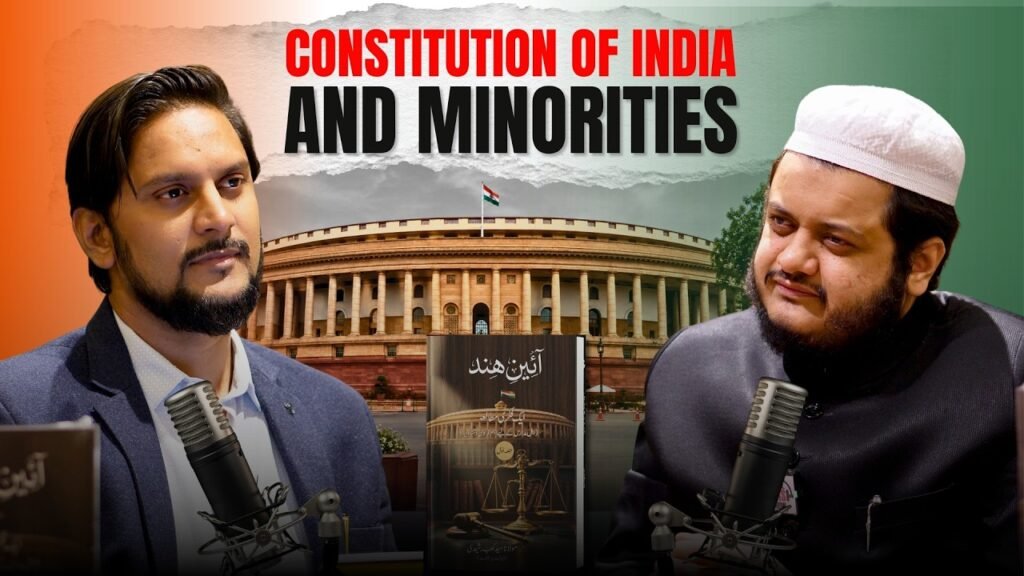
    Syed Kaab Rasheedi discussing law, constitutional rights and youth on The HRS Show

    Subscribe to The HRS Show for more conversations on mindset, discipline, and purpose. [Watch on YouTube →]

  • Syed Kaab Rasheedi: Law, Rights & the Constitution | HRS Show

    Syed Kaab Rasheedi: Law, Rights & the Constitution | HRS Show


    What happens when a young person decides to enter a profession that his own community rarely encourages?

    For Syed Kaab Rasheedi, the answer was to study law, understand the Indian Constitution and use that knowledge to serve his community and society.

    On this episode of The HRS Show, Syed Kaab Rasheedi shares the journey that took him from a traditional Islamic educational background to studying law and eventually becoming an advocate at the Supreme Court of India.

    The conversation goes beyond his personal career.

    It explores why young people need to understand their rights and duties, why law can be a powerful career, why communities need more legal professionals and how his book Aaene Hind aims to make constitutional and legal information more accessible.


    Watch the Full Conversation

    Hear Syed Kaab Rasheedi discuss his journey, law, constitutional rights, youth education and Aaene Hind in his own words on The HRS Show.

    Click the image below to watch the full episode on YouTube.


    1. Growing Up in an Islamic Scholarly Family

    Syed Kaab Rasheedi was born into a family with a long scholarly tradition.

    He describes his family as an ilmi khandan—a family deeply connected with Islamic scholarship and education. He speaks about his great-grandfather, grandfather and father, and the educational institutions and religious work associated with his family.

    Religious education therefore became a natural part of his childhood.

    He memorized the Qur’an and completed his Hifz at the age of 13.

    But his education did not stop there.

    One of the more interesting parts of his story is how his mother encouraged him to pursue modern education after he completed Hifz.

    He went on to complete his school education and graduation while continuing his religious studies.

    This combination eventually became important in shaping his outlook.


    2. Why His Time Abroad Changed His Perspective

    Another turning point came when Rasheedi travelled to Johannesburg for a language course.

    He describes studying alongside people from different countries and backgrounds. Being exposed to different cultures and viewpoints made him reconsider the idea that one person’s perspective is automatically superior.

    Instead, he learned the value of listening to different viewpoints and appreciating the good work being done by people in different fields.

    The experience, he explains, helped him become more flexible in his thinking and more open to different perspectives.

    That lesson became important later in his professional journey.


    3. Why Did Syed Kaab Rasheedi Choose Law?

    After completing his education, Rasheedi decided that he wanted to study law.

    His father did not simply tell him whether the decision was right or wrong. Instead, he asked him why he wanted to pursue law.

    Rasheedi’s answer was connected to service.

    He wanted to understand the Constitution, rights and duties and eventually use that knowledge to contribute to his community.

    He went on to study law at Lucknow University.

    Even before completing his law education, he began focusing heavily on constitutional issues, rights and duties.

    Eventually, after the COVID period and during the final stage of his legal education, he was appointed as a legal adviser to Jamiat Ulama Uttar Pradesh.

    His career had taken a direction that combined his educational background with his interest in law and constitutional matters.


    4. Why Are Young People Not Choosing Law?

    One of the central questions in the conversation is why law does not receive enough attention in career counselling.

    Rasheedi argues that young people should look more seriously at the legal profession.

    He describes law as a profession with significant scope and responsibility, particularly for those who want to work in the High Courts or Supreme Court.

    But for him, the value of law goes beyond money.

    A lawyer can understand the Constitution, represent people in court and help individuals understand their legal rights.

    That is particularly important when people do not know where to turn when they face a legal problem.


    5. Understanding Your Constitutional Rights

    A major theme throughout the episode is constitutional awareness.

    Rasheedi argues that many ordinary citizens do not have a strong understanding of their basic rights.

    He believes that knowing your rights gives you the confidence to stand up for them.

    The conversation also discusses the relationship between rights and responsibilities.

    The Constitution does not simply provide citizens with rights. It also includes fundamental duties.

    The larger message is straightforward:

    Citizens should understand both what they are entitled to and what responsibilities they carry.

    This awareness can help people participate more responsibly in society.


    6. The Constitution and Its “Basic Structure”

    The discussion also touches on the landmark Kesavananda Bharati v. Union of India case.

    Rasheedi highlights the importance of the Supreme Court’s decision and the principle that the Constitution has a basic structure that cannot simply be destroyed through amendments.

    The episode uses this discussion to emphasize why constitutional literacy matters.

    If people do not understand the Constitution, it becomes difficult for them to understand the principles that protect their rights.

    Rasheedi describes fundamental rights as being at the heart of the Constitution.

    For young people in particular, learning these fundamentals can provide a stronger understanding of citizenship.


    7. Aaene Hind: Making Legal Information Accessible

    This brings us to the book at the centre of the episode: Aaene Hind.

    Rasheedi explains that the book was created to address a practical problem.

    Many people may need legal information but do not know how to access or understand it.

    The book attempts to make important constitutional and legal material more accessible, including information relating to institutions, laws and legal procedures.

    He explains that the book includes legal documents and orders, including English versions, so that readers can understand the material and use it when approaching government officials or authorities.

    The intention is not simply to provide information.

    It is to provide guidance that people can actually use.


    8. Why the Book Is Not Only for One Community

    Although the conversation frequently discusses issues affecting Muslims and Islamic institutions, the purpose of Aaene Hind is presented in a broader context.

    Rasheedi explains that the book is intended for people studying in madrasas, colleges, working professionals and young people who want to bring positive change to society.

    The book is therefore connected to a larger idea:

    Legal awareness should not remain limited to lawyers.

    Ordinary citizens should have enough basic knowledge to understand the system they live in.


    9. Preparing the Next Generation

    Another strong theme in the conversation is the need to give young people responsibility.

    Rasheedi argues that older generations sometimes hold onto responsibilities for too long instead of preparing younger people to take over.

    His message is that communities need to develop the next generation rather than continually treating young adults as children.

    He gives examples from Islamic history where younger people were given responsibility and opportunities to lead.

    For him, developing young people means giving them space to learn, make decisions and contribute.


    10. Find Your Goal Before Choosing Your Path

    Towards the end of the conversation, Rasheedi gives advice to young people who want to create change but don’t know what direction to take.

    His answer is simple:

    First, decide where you want to go.

    He uses the example of travelling to Delhi. If you don’t know your destination, you can travel for a long time without actually getting closer to where you want to be.

    The same principle applies to careers and personal goals.

    Before choosing a course, profession or career path, young people should ask themselves:

    • What do I want to achieve?
    • Why do I want to achieve it?
    • What skills will I need?
    • Who can guide me?
    • How can my career benefit other people?

    A clear destination makes it easier to choose the right route.


    Final Thoughts

    Syed Kaab Rasheedi’s journey is a story about education, career choices and responsibility.

    He grew up in a traditional scholarly environment, pursued modern education, studied law and eventually began using his legal knowledge to work on issues involving constitutional rights and community concerns.

    His message to young people is particularly relevant.

    Don’t limit yourself to the careers that everyone around you is choosing.

    Learn.

    Explore different fields.

    Understand the Constitution.

    Know your rights and responsibilities.

    And most importantly, find a purpose behind your education and career.

    His book Aaene Hind is an extension of that mission: making legal and constitutional information more accessible so that people can become more informed about the system around them.

    The broader lesson from the conversation is that education becomes most valuable when it enables people to understand their responsibilities, stand up for their rights and contribute positively to society.

    The future depends not only on what today’s generation achieves, but on how well it prepares the generation that follows.


    The HRS Show also explores stories of discipline, purpose and personal growth. Read our conversation with Motesham Ali Khan to learn how years of discipline and commitment shaped his journey.

    “Read our conversation with Motesham Ali Khan”


    Subscribe to The HRS Show for more conversations on mindset, discipline, and purpose. [Watch on YouTube →]
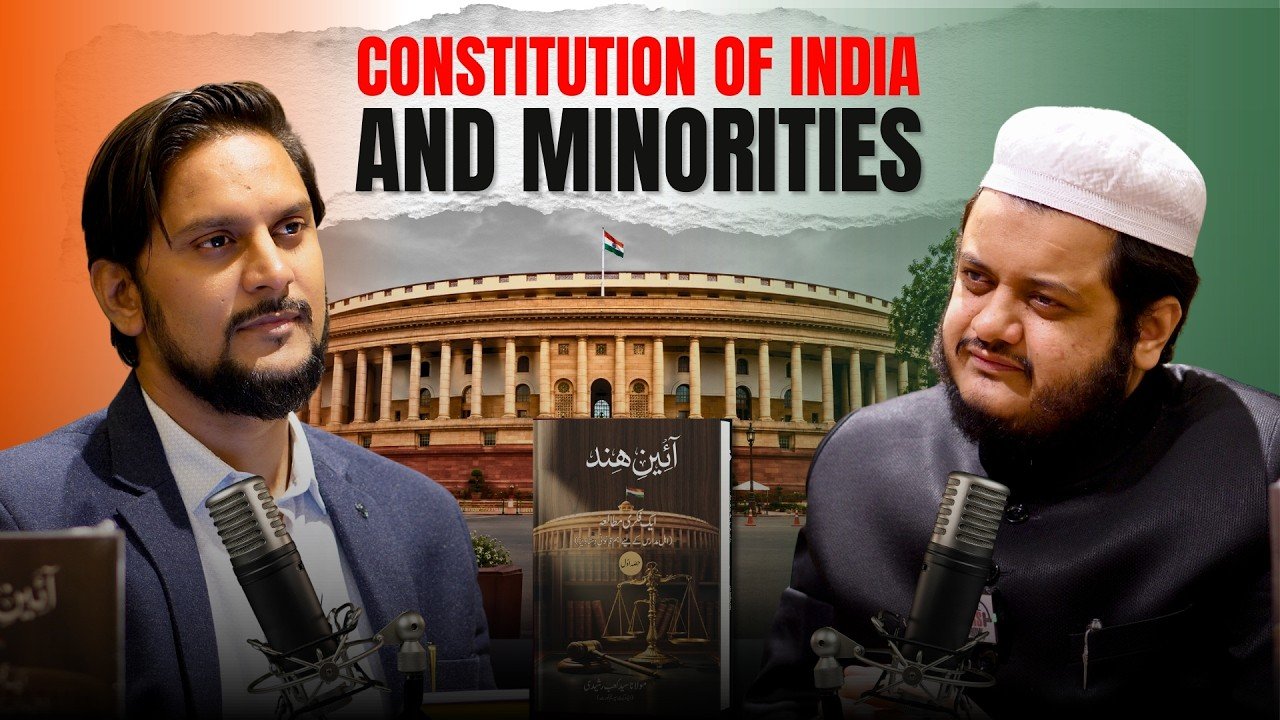
  • Mohammad Naseeruddin Manshawi: Quran, Qiraat & a Life of Purpose

    Mohammad Naseeruddin Manshawi: Quran, Qiraat & a Life of Purpose


    Mohammad Naseeruddin Manshawi: Quran, Qiraat & a Life of Purpose

    The Qur’an can shape a person’s life in ways that go far beyond learning to recite its words. For Mohammad Naseeruddin Manshawi, the journey began in childhood and eventually took him from local Qur’an competitions to international stages in Iran, Malaysia and Egypt.

    On this episode of The HRS Show, he reflects on his childhood, his passion for Qiraat, the teachers who influenced him, his connection to the legacy of Sheikh Muhammad Siddiq Al-Minshawi, and the mission behind Sharfiya Qiraat Academy.

    His story is not only about achievement. It is also about family, education, discipline, language and passing something meaningful to the next generation.


    Watch the Full Conversation

    Hear Mohammad Naseeruddin Manshawi share his journey, experiences and reflections in his own words on The HRS Show.

    Click the image below to watch the full episode on YouTube.

    Mohammad Naseeruddin Manshawi on Quran recitation and Qiraat

    Watch the full episode on YouTube


    1. A Childhood Shaped by the Qur’an

    Manshawi’s connection with the Qur’an began at home.

    He describes his parents as people who had a deep love for the Qur’an. His father, Qari Mohammad Shafuddin, was also an accomplished teacher of Tajweed and Qiraat. The Qur’an was therefore not something separate from family life. It was part of the environment in which he grew up.

    His passion for Qiraat grew when he listened to the legendary Egyptian reciter Sheikh Abdul Basit Abdul Samad. As a child, he would repeatedly listen to recordings and practice the recitation himself.

    That early fascination eventually became a serious commitment.

    He later developed a particular admiration for Sheikh Muhammad Siddiq Al-Minshawi. His desire to study and imitate the recitation style of his inspiration became an important part of his own development.


    2. From Childhood Competitions to International Stages

    Manshawi’s journey did not happen overnight.

    He began participating in smaller competitions while he was young. His first prize came when he was around seven years old, marking the beginning of a journey that would eventually take him onto international platforms.

    In 1995, an All-India Qiraat competition was held in Hyderabad. Around 200 Huffaz and Qurra from across India participated. Manshawi was selected to represent India at the international competition in Iran.

    The experience exposed him to reciters from different parts of the world.

    He recalls reaching the final stage of the international competition in Tehran and finishing in fourth position. The experience also gave him something beyond a competition result: recognition from Arab participants who associated his recitation with the style of Al-Minshawi.

    His international journey continued.

    He later represented India in Malaysia in 1998 and travelled to Egypt in 2011.

    For Manshawi, these journeys were not simply about trophies. They were opportunities to learn, meet people connected to the tradition of Qur’anic recitation and deepen his connection with the teachers and reciters who had inspired him.


    3. A Special Connection to Al-Minshawi’s Legacy

    One of the most memorable parts of the conversation is Manshawi’s connection with Sheikh Muhammad Siddiq Al-Minshawi.

    For years, he had listened to Al-Minshawi’s recordings and worked to develop his own recitation. Eventually, he travelled to Egypt with the hope of seeing the places connected to his mentor.

    That dream became reality.

    During his visit, Manshawi reached the family home of Al-Minshawi and met members of his family. In 2011, he received the title “Manshawi” from Al-Minshawi’s brother at the family home. He describes the moment as a great honour.

    For someone who had spent years listening to a reciter who had deeply influenced him, receiving that recognition from the family carried a meaning far greater than a competition award.

    It represented the meeting of admiration, mentorship and legacy.


    4. Sharfiya Qiraat Academy: Continuing a Family Mission

    Manshawi’s work extends beyond his own recitation.

    The foundation for his educational work was laid by his father through an institution known as Idara Shafiya. Manshawi later developed it into what is now presented as Sharfiya Qiraat Academy.

    The goal is not simply to preserve an old tradition.

    Manshawi explains that the academy was given a more modern identity so that younger people could connect with it more easily.

    This reflects one of the central ideas of the episode: religious education and modern education do not have to be separated.

    Manshawi encourages the younger generation to carry both deen and dunya together. His own life reflects that approach. Alongside his work in Qiraat, he pursued higher education and became associated with Urdu teaching at Osmania University.


    5. Why Urdu Still Matters

    Another important part of the conversation moves beyond Qiraat and into the preservation of Urdu.

    Manshawi believes that Urdu cannot survive through conferences and seminars alone. He argues that families have an important role in keeping the language alive.

    His message is simple: parents should take responsibility for teaching Urdu to their children.

    He gives an example from his own teaching experience. Some children attending Qiraat classes were more comfortable writing in Roman English. However, he also encountered young students who could read and write Urdu because their mothers had taught them at home.

    For Manshawi, that is evidence that preserving a language does not always require a large institution.

    Sometimes, it begins with a parent sitting with a child.


    6. Success Is Also About What You Pass On

    Perhaps the most powerful theme of the episode is the idea of legacy.

    Manshawi’s achievements include international competitions, judging national Qiraat competitions and training students. He also discusses the success of his son, Hafiz Mohammad Shoaib Shafuddin, whose Qur’an recitation journey began at a very young age.

    The family environment played an important role.

    Manshawi explains that children learn from what they see their parents doing. If parents regularly recite and listen to the Qur’an, children can naturally develop a relationship with it as well.

    This changes the definition of success.

    Success is not only about standing on a stage.

    It can also mean creating an environment in which the next generation develops a love for the Qur’an.


    7.The Message for Parents

    Towards the end of the episode, the conversation becomes a message directly to parents.

    If parents want their children to be connected to the Qur’an, they must first examine their own relationship with it.

    Are we reading the Qur’an regularly?

    Are we learning Tajweed?

    Are we listening to good reciters?

    Are we creating an environment where our children see the Qur’an as part of everyday life?

    Manshawi argues that the relationship many people have with the Qur’an can become superficial. He encourages parents to strengthen their own connection first and then help the next generation develop theirs.

    This is perhaps the simplest lesson from the entire conversation:

    Children often follow what they see before they follow what they are told.


    Final Thoughts

    Mohammad Naseeruddin Manshawi’s story is much bigger than a career in Qiraat.

    It is a story of a child whose love for Qur’anic recitation grew into a lifelong mission. From listening to great reciters as a young boy to representing India internationally, from receiving recognition connected to the legacy of Al-Minshawi to developing Sharfiya Qiraat Academy, his journey has remained connected to one central purpose: keeping the Qur’an, education and tradition alive for the next generation.

    His message also extends beyond Qiraat.

    He speaks about balancing deen and dunya, preserving Urdu, supporting young students and creating homes where children can develop a genuine connection with the Qur’an.

    Ultimately, his story reminds us that a meaningful legacy is not only what we achieve ourselves.

    It is what we inspire others to carry forward.

    If you enjoyed this conversation, watch the full episode of The HRS Show and hear Mohammad Naseeruddin Manshawi share his journey in his own words.

    Watch the full conversation on YouTube


    The HRS Show explores stories of discipline, purpose and personal growth through conversations with people from different walks of life. Read our previous conversation on discipline and mission to discover another perspective on commitment and purpose.